Introduction: A New Era of Yield Farming
For income-oriented investors, the ticker symbols JEPQ, GPIQ, and QYLD are household names. These funds pioneered the concept of generating high-yield monthly income by selling call options on the Nasdaq 100. However, as the US market becomes increasingly saturated, a “yield revolution” has been quietly taking place in South Korea.
Sophisticated investors are discovering that by looking toward the Seoul exchange (KOSPI), they can access the same underlying US tech stocks but with significantly higher distribution rates. If you are chasing maximum cash flow, it is time to compare the “American Originals” with the “Korean Innovators.”
1. The Data: 2025 Performance Comparison
Numbers don’t lie. When we look at the actual distribution yields for the year 2025, a clear gap emerges between US-listed products and their Korean counterparts tracking the same index.
The Nasdaq 100 Battle (US vs. Korea)
- US Standards:
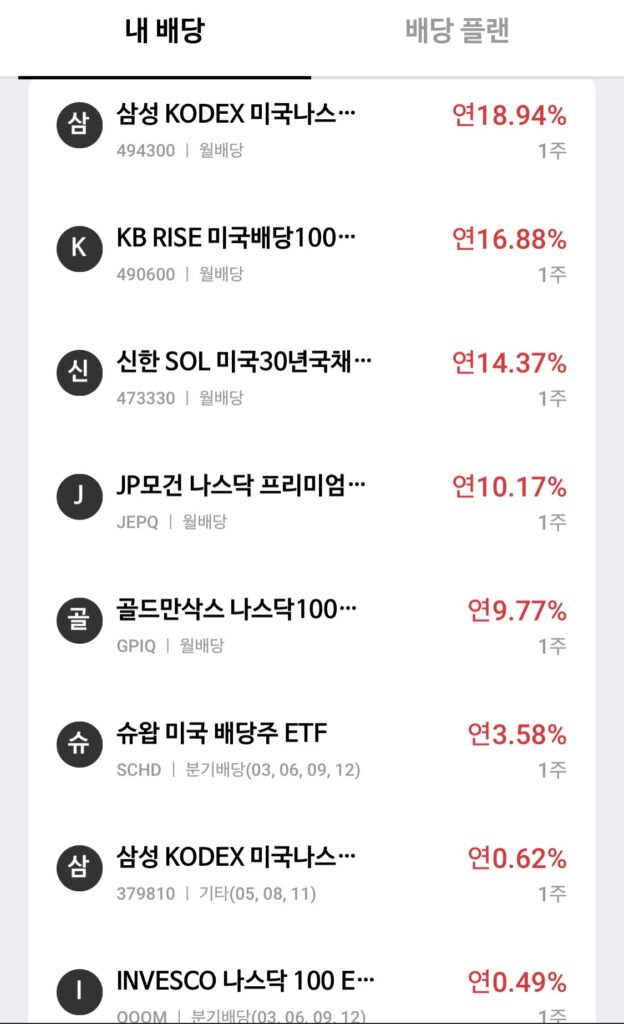
- JEPQ (JPMorgan Nasdaq Equity Premium Income): Finished 2025 with an annual yield of approximately 11.7%. While consistent, it remains capped by its active management style.
- GPIQ (Goldman Sachs Nasdaq 100 Core): Delivered around 10.5%, trailing slightly behind its peers.
- QYLD (Global X Nasdaq 100 Covered Call): Maintained its steady 12.0% yield but suffered from limited capital appreciation.
- The Korean Challengers:
- KODEX US Nasdaq 100 Daily Covered Call OTM (494300): This fund shocked the market with a staggering 19.1% actual annual distribution.
- RISE US Tech 100 Daily Fixed Covered Call (488580): Delivered a massive 19.5% yield, maximizing the volatility of the tech sector.
- TIGER US Nasdaq 100 Target Daily Covered Call (486290): Achieved a solid 15.0%, precisely hitting its aggressive premium target.
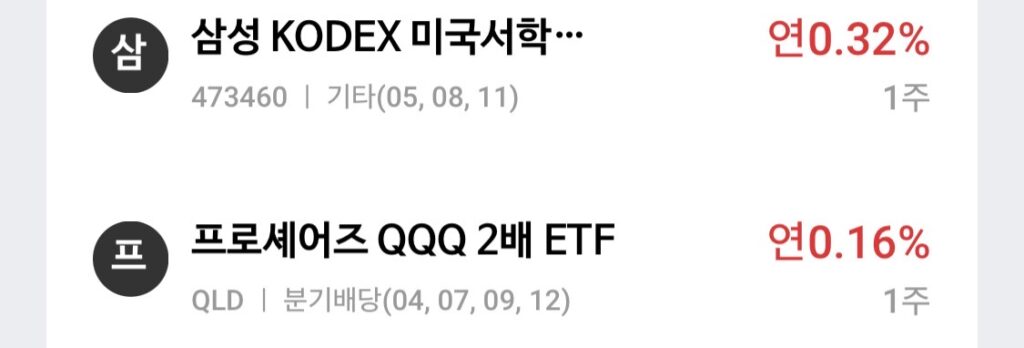
As the data shows, the Korean ETFs are providing a 3% to 7% “Yield Premium” over the most popular US alternatives.
2. Why the Difference? The Power of 0DTE and OTM
The primary reason for this outperformance is the structural innovation in the Korean ETF market. While many US funds still rely on monthly or weekly option writing, Korean asset managers like Samsung (KODEX) and KB (RISE) have mastered the Daily (0DTE/1DTE) Option Strategy.
- Exploiting Time Decay (Theta): By selling options that expire every single day, these funds harvest the most rapid portion of time decay, generating higher premiums than monthly contracts.
- OTM (Out-of-the-Money) Advantage: Unlike QYLD, which sells “At-the-Money” options and caps all upside, the KODEX OTM strategy sells options 1% or 2% above the current price. This allows investors to capture a portion of the Nasdaq’s growth while still collecting nearly 20% in distributions.
- Efficiency in Execution: Korean managers have established high-speed execution desks that trade directly on US exchanges during New York hours, ensuring no “time-zone premium” is lost.
3. The “SCHD” Evolution: Transforming Dividend Growth into High Income
One of the most fascinating comparisons is in the dividend growth sector. SCHD (Schwab US Dividend Equity) is a favorite for long-term investors, but its 3.4% yield in 2025 often leaves income-hungry retirees wanting more.
Enter the RISE US Dividend 100 Daily Fixed Covered Call (488100). This Korean ETF holds a portfolio nearly identical to SCHD but adds a daily covered call overlay. In 2025, it delivered a whopping 17.8% distribution. For a US investor, this represents the “Holy Grail”: the safety of SCHD’s high-quality value stocks combined with the cash flow of a high-yield instrument.
4. Strategic Diversification for Global Investors
You might ask, “Why should I buy a Korean ETF for US stocks?” The answer is Strategy Diversification. If you only hold JEPQ, you are 100% dependent on JPMorgan’s proprietary management. By adding a Korean-listed fund like KODEX, you are diversifying your income stream across different option-writing methodologies and different geographic regulatory environments.
Furthermore, since many of these funds are Currency Unhedged, they offer a natural hedge. For those holding USD, buying these funds in KRW (Korean Won) at its current undervalued state provides a secondary play on currency mean reversion.
Conclusion: Don’t Leave Yield on the Table
The financial world is no longer a one-way street. While US markets offer the best assets, Korean financial engineering is currently offering the best cash flow extraction from those assets.
With distribution yields reaching near 20% on the Nasdaq 100 and over 17% on dividend growth portfolios, the Korean ETF market is no longer just for locals. For any US investor looking to retire early or maximize their monthly passive income, the Korean “Daily Covered Call” ETFs are the ultimate tool to accelerate your journey to financial freedom.
답글 남기기